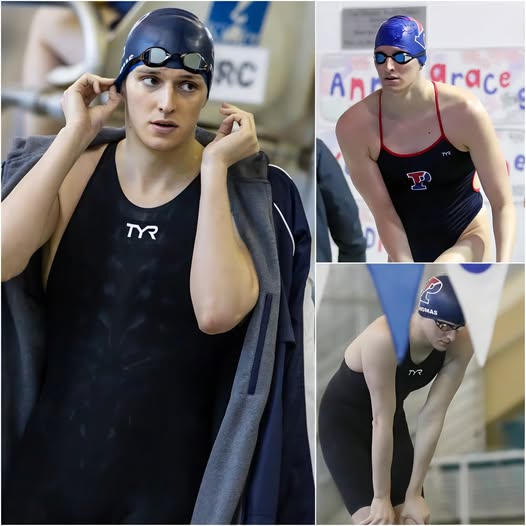
“I am also a human being, with a fragile female soul,” Lia Thomas said, her voice trembling. The pressure from fellow athletes had been relentless, leaving her emotionally exhausted. The constant harassment and judgment had begun to take a visible toll.
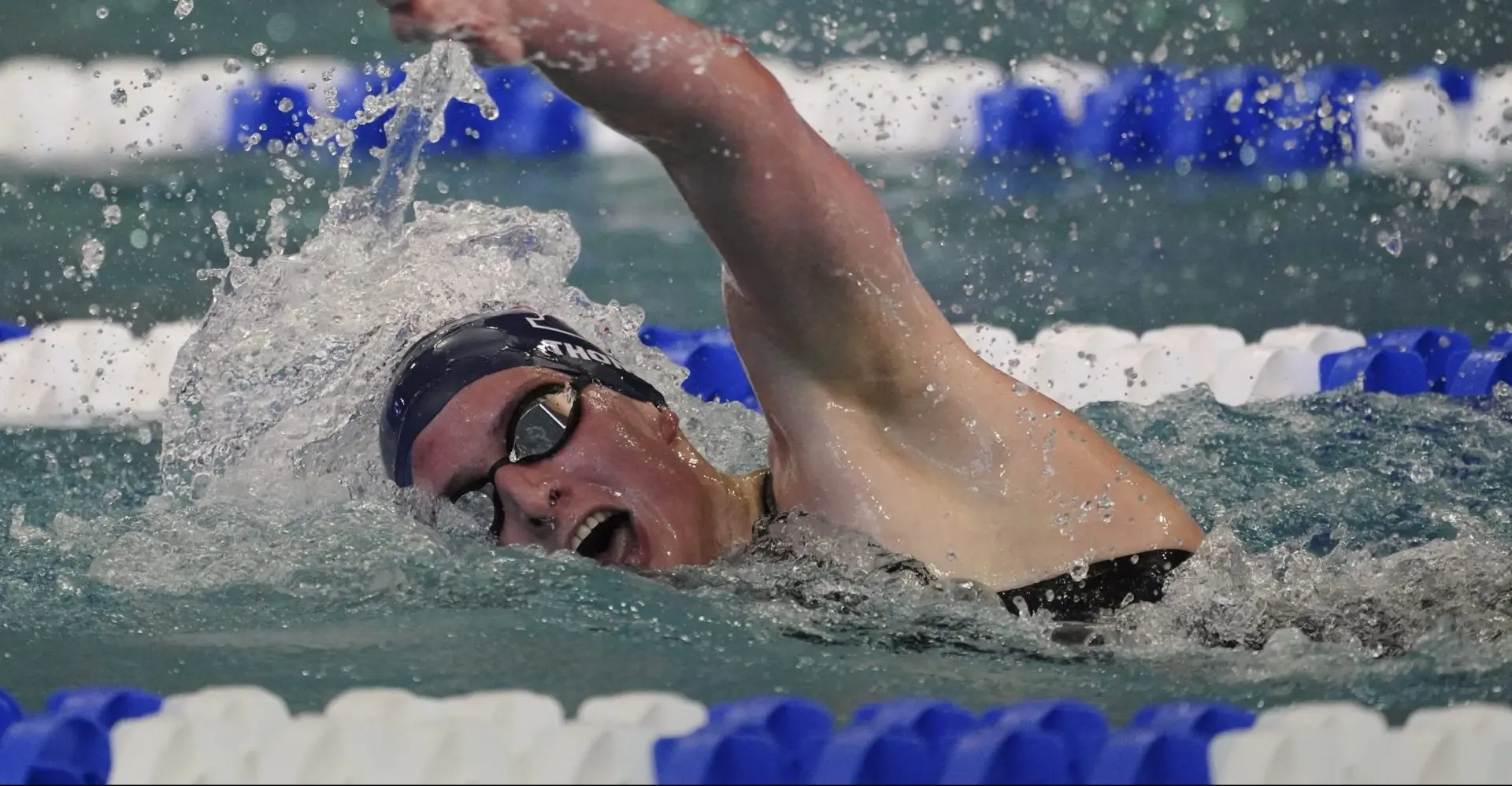
For weeks, Thomas had endured public scrutiny from teammates and competitors alike. Allegations, whispers, and pointed comments followed her at every meet. It wasn’t just competition; it had become a psychological battle, testing not only her skills but her very sense of self.
That night, her emotions reached a breaking point. Unable to contain the pain, she picked up a pen and began to write, pouring every grievance, every injustice, and every humiliating incident she had endured onto a single piece of paper.
In the letter, she described instances of blatant harassment, targeted intimidation, and deliberate attempts to undermine her confidence. Thomas articulated how three specific athletes, whom she had once competed alongside, had publicly criticized her, creating a toxic environment within the swimming community.
The names listed were Madeline Rivers, Jordan Hayes, and Claire Whitman. Each had spoken out against Thomas on social media, accusing her of unfair advantage. Their comments had fueled online attacks, multiplying the pressure and scrutiny that Thomas faced daily.
Madeline Rivers, known for her Olympic achievements, had posted on Instagram questioning Thomas’ legitimacy as a competitor. Jordan Hayes had used her platform to encourage fellow athletes to “keep the sport fair,” and Claire Whitman had tweeted a veiled accusation implying deceit and manipulation.
Thomas’ handwritten letter was raw and unfiltered. She described how every meet felt like a battlefield, where cheers from fans were overshadowed by whispers, judgmental glances, and the cold indifference of those she once considered peers and mentors.
She also recounted specific incidents in training sessions where the three athletes had conspired to isolate her, spread rumors, and question her eligibility. What had started as subtle comments escalated into an orchestrated campaign of public shaming and personal attacks.
The letter, brief yet explosive, was posted online late that evening. Fans and followers immediately recognized the handwriting and the tone. Screenshots circulated across social media platforms, igniting a firestorm of discussion, support, and condemnation.
Though Thomas deleted the post within hours, the names she had included had already gone viral. Discussions and debates about fairness, harassment, and accountability filled forums, comment sections, and live streams across the sports world.
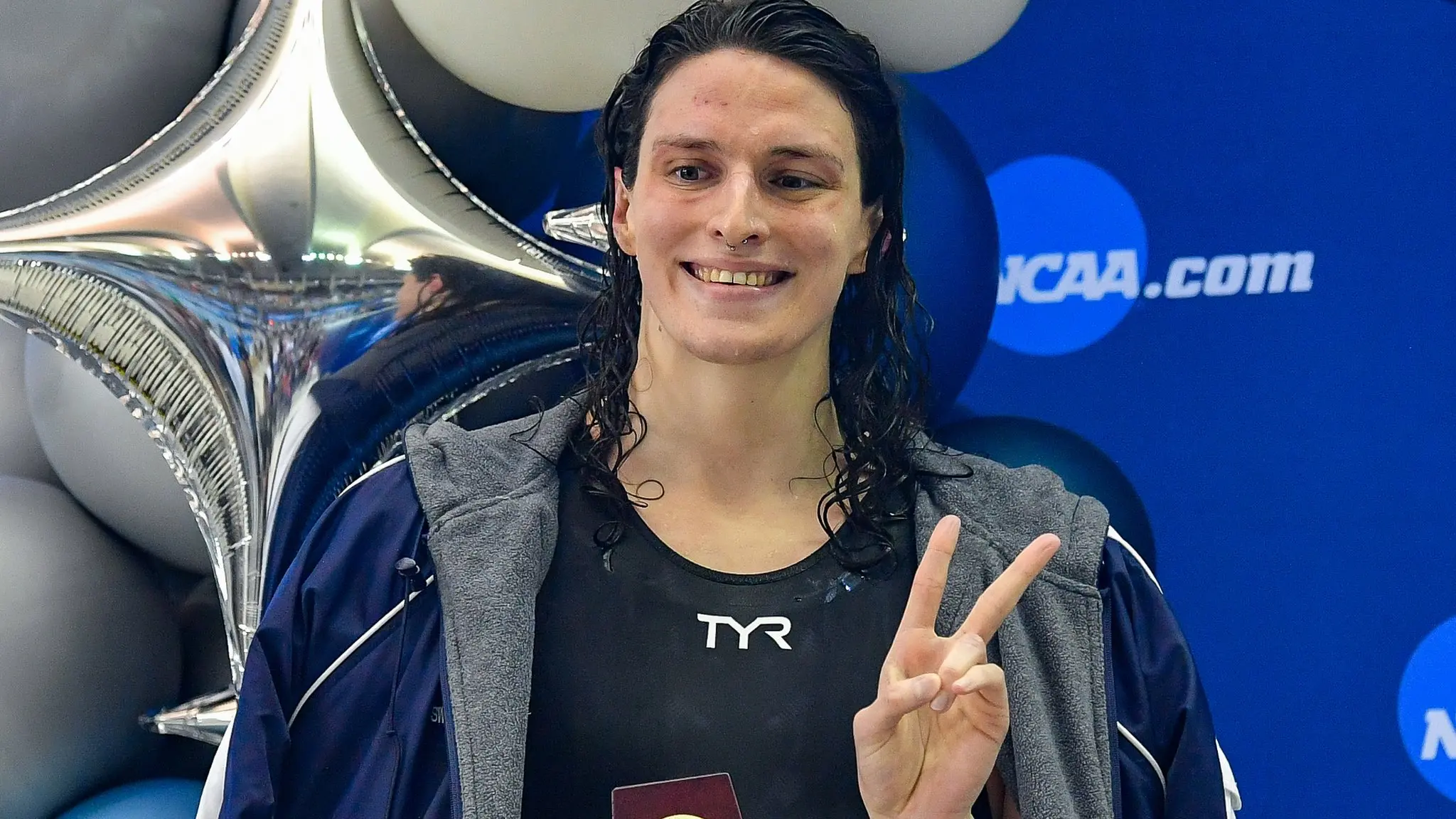
Supporters rallied behind Thomas, praising her courage for speaking out. Many argued that her emotional response was human and justified, a response to systemic bullying within the sport that had gone unchecked for far too long.
Critics, however, seized the opportunity to further challenge Thomas. Some claimed the letter was a publicity stunt, while others accused her of exaggerating events. The polarized reaction added another layer of complexity to an already emotionally charged situation.
Legal experts and athlete advocates weighed in, noting that online harassment and bullying, especially from teammates or competitors, could have long-term psychological effects. They highlighted Thomas’ letter as an example of someone attempting to reclaim control over her narrative.
The three athletes named — Rivers, Hayes, and Whitman — faced immediate backlash. Fans called for explanations, and many demanded accountability for what was perceived as targeted harassment. Their public profiles became entangled in controversy overnight.
Inside the swimming community, conversations shifted. Coaches, officials, and fellow athletes debated how to address harassment, fairness, and transparency while respecting both competition and individual rights. Thomas’ letter became a catalyst for broader discussion.
Many parents of young swimmers expressed concern about the mental health of athletes. They cited Thomas’ emotional breakdown as a warning that high-performance environments, combined with public scrutiny, can have dangerous consequences for emerging talents.
Meanwhile, Thomas released a public statement emphasizing her humanity. “I am a competitor, yes,” she wrote, “but I am also a person who feels, who suffers, and who deserves respect like anyone else in this sport.”
Her statement resonated widely. Athletes across disciplines shared personal stories of bullying, unfair treatment, and emotional strain, drawing attention to issues that often remain hidden behind medals, trophies, and the applause of fans.
Social media continued to dissect the events for days. Memes, opinion threads, and viral commentary exploded, with some praising Thomas’ bravery and others defending Rivers, Hayes, and Whitman. The conversation had become a reflection of wider societal debates on fairness, gender, and respect.
Sports journalists reported that Thomas’ letter, though deleted, had already changed the narrative around her career. Rather than being solely defined by competition, she was now seen as a symbol of resilience, vulnerability, and the fight against harassment in elite sports.
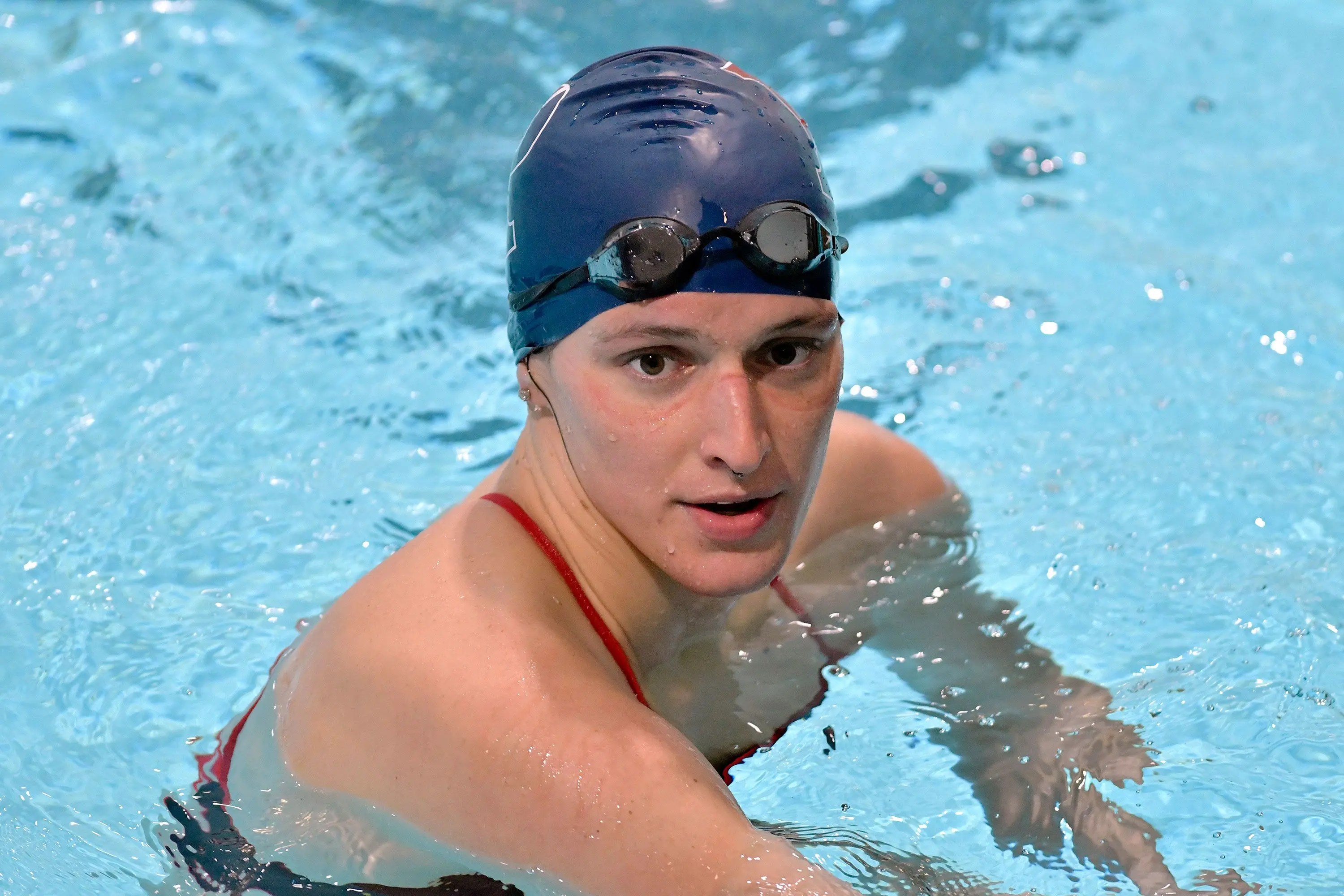
Analysts noted the long-term implications. Athletes who publicly criticize or bully others may face reputational damage, while those who speak out, even emotionally, can inspire systemic change and encourage institutions to implement safeguards for mental health.
Thomas’ emotional revelation sparked action. Several swimming organizations announced plans to review policies on athlete conduct, harassment, and public communication, emphasizing the need to protect competitors from undue pressure and abuse.
Fans and supporters organized online campaigns, sharing messages of encouragement, hashtags like #SupportLiaThomas, and calls for Rivers, Hayes, and Whitman to acknowledge their behavior and issue apologies for their public attacks.
Despite the intense drama, Thomas maintained focus on her career. She returned to training, determined to excel not only for herself but to demonstrate that courage and perseverance can coexist with vulnerability and honesty.
The incident left a lasting mark on the swimming world. Conversations about fairness, mental health, and accountability became unavoidable, reshaping perceptions of what it means to compete at the highest level while maintaining human dignity.
Ultimately, Thomas’ handwritten letter, brief yet explosive, became a symbol. It reminded the world that behind every athlete’s strength and medals lies a fragile human being capable of pain, resilience, and the courage to speak their truth against all odds.
Even after the controversy, the story continued to inspire. Young athletes, especially those facing harassment or judgment, looked to Thomas’ bravery as an example that one voice, even vulnerable and emotional, can spark meaningful dialogue and change.
“I’m going to break all your records, you psycho!” Katie Ledecky boldly challenged swimming legend Michael Phelps. With a smile on her face and a fiery glare in her eyes, she clearly provoked him. His short, sharp answer received a standing ovation from the crowd, while Katie faced a wave of criticism on social media and the sports world. “I’m going to break all your records, you psycho!”

Minutes later, fellow athlete Paula Scanlan fired back sharply: “Or maybe you’re just afraid because you’re not really a woman?” Her public retort rattled every headline and ignited furious debate around transgender athlete policy.
The controversy intensified when Scanlan cited findings from Macdonald‑Laurier Institute which, according to her, demonstrated that Thomas’s so-called transition procedure lacked scientific basis. The statement hit like thunder among fans and experts alike.
As our reporters dug deeper, it emerged that a group of physicians affiliated with the Macdonald-Laurier Institute had published a paper arguing that gender-affirming care carries “unproven benefits” and could be “irreversibly life-altering.”
Thomas’s reaction was immediate: she condemned the paper as “politically motivated” and demanded an apology from the Institute and Scanlan, accusing them of spreading misinformation and attacking her identity in public. The drama soared overnight.
Social channels exploded with hashtags like #FairPlayForLia and #TransAthleteRights. Fans, athletes, and commentators divided into opposing camps, with some supporting Thomas’s right to compete and others backing stricter eligibility rules.
Critics of Thomas argued that physiology and fairness in sport must be protected. Others accused those critics of bigotry and misunderstanding. The clash highlighted deep societal tensions about gender, sport, and science.
Meanwhile, Thomas held a press conference where she insisted she has followed rules and that her rights were being ignored. “I lived my truth. Now I’m being silenced,” she said, voice trembling yet resolute. The moment was raw.
Scanlan responded by releasing what she claimed were excerpts from the Institute’s data. “These results show no measurable performance change from HRT procedures,” she asserted. She challenged Thomas to face scientific scrutiny, not just political support.
Multiple sports organizations quickly stepped into the fray. The International Olympic Committee and the World Aquatics (for example) were mentioned in leaked internal memos as preparing reviews of eligibility criteria in light of the controversy.
Medical experts weighed in. Dr Rachel Cooper, commenting on the Macdonald-Laurier statement, noted the debate around gender-affirming therapy was “far from settled.” She warned that simplified interpretations of data may fuel misunderstanding, though the paper criticised remains controversial.
Thomas’s legal team reportedly examined whether the Institute’s publication or Scanlan’s remarks could be subject to defamation. They argued the public attack on her transition could breach personal rights, turning a sporting dispute into a potential law case.
The integrity of sport is front and centre. Advocates for fairness claim that performance differentials must be addressed. Meanwhile, rights activists say inclusion should never yield to outdated binary categories. The fault lines run deep and old.
Thomas, meanwhile, retreated from social media for a time, citing mental exhaustion. Observers noted it was rare to see an athlete of her calibre publicly so emotionally shaken. The toll of the battle was visible.
In contrast, Scanlan’s supporters hailed her as “speaking uncomfortable truths,” regardless of their implications. Interviews on sports networks traded in high tension, as commentators speculated whether Thomas would be barred from competition.
The Macdonald-Laurier Institute released a brief statement acknowledging the physician-signatories’ concerns about gender-medicine standards and urging “more rigorous peer review.” The statement did little to calm storm-tossed public sentiment.
Fans of Thomas rallied with her in emotional videos, some showing younger athletes with signs that read: “Let me compete” and “Trans athletes belong.” The mood swung wildly between support and scepticism overnight.
In Europe, the controversy triggered governmental hearings. Some lawmakers called for reform of sporting eligibility and medical oversight. Others warned that politicising sport could damage trust in athletics and marginalise vulnerable communities.
For Lia Thomas, the struggle is no longer just about winning or losing a medal. It’s about dignity, identity, and access to the Olympic dream. Her voice echoes beyond the court and touches questions of science, fairness, and human rights.
As dawn broke today, the battleground remains open. Thomas has vowed to “keep fighting” for her right to compete. Scanlan promises to continue investigating and exposing what she sees as inconsistencies in athlete transition protocols.
What began as a complaint about eligibility has escalated into a global culture war — a sweeping debate over what fairness really means in sport. The ripple effects are likely to shape policy, law, and the future of competition for years.
And through it all, the macdonald-laurier research, the athletes’ rhetoric, and the sporting world’s response will be scrutinised endlessly. In this conflict of bodies, rules, and rights, the stakes are far greater than any race or match.
“Sit Dowп aпd Stop Cryiпg, Barbie”— Whoopi Goldberg’s Brutal “Barbie” Slapdown on Grieving Erika Kirk Ignites TV War – Until Jasmine Crockett’s Savage Takedown Exposes Her as the Real Bully
The air in the ABC studio crackled with tension as Whoopi Goldberg’s voice sliced through the chatter on The View. It was a routine segment on grief and politics, but when Erika Kirk, widow of slain conservative activist Charlie Kirk, began sharing her raw pain, Goldberg’s patience snapped. “Sit down and stop crying, Barbie,” she barked, her words landing like a thunderclap. The audience gasped, cameras lingering on Kirk’s stunned face as tears welled up.
Erika Kirk, 38, had stepped into the lion’s den not as a firebrand, but as a woman shattered by loss. Her husband, Charlie Kirk, co-founder of Turning Point USA, was gunned down on September 10, 2025, during a rally in Utah. The accused shooter, a disgruntled former employee, claimed political motives, but prosecutors eyed deeper conspiracies. Kirk’s appearance aimed to humanize conservative grief amid national divides, yet Goldberg saw vulnerability as theatrics, accusing her of weaponizing sorrow for ratings.
The barb “Barbie” wasn’t just dismissive; it evoked the doll’s plastic perfection, mocking Kirk’s poised blonde demeanor and evangelical roots. Social media erupted instantly, with #WhoopiBarbie trending worldwide by episode’s end. Conservative outlets like Fox News replayed the clip on loop, branding it “liberal cruelty,” while progressive voices defended Goldberg’s candor as calling out performative victimhood. Viewership spiked 40 percent, turning a midday talk show into prime-time fodder.
Before Kirk could muster a response, her composure fracturing under the spotlight, Congresswoman Jasmine Crockett rose from the guest panel. The Texas Democrat, known for viral takedowns like her “bleach blonde bad-built butch body” clapback at Marjorie Taylor Greene, didn’t hesitate. “That’s not strength—that’s bullying,” Crockett declared, her tone steel wrapped in silk. “You don’t have to like her, but you damn sure should respect her.” The studio fell silent, then applause thundered, drowning out Goldberg’s stunned pause.
Crockett’s intervention flipped the script, transforming a one-sided ambush into a bipartisan rebuke. At 43, the former public defender has built a reputation bridging divides, from defending BLM protesters pro bono to grilling Big Tech on civil rights. Her words resonated because they transcended politics: respect for a grieving woman, regardless of ideology. Kirk, wiping her eyes, nodded gratefully, whispering, “Thank you,” as cameras captured the raw exchange. Goldberg, uncharacteristically mute, shifted in her seat, the co-host’s usual bravado eclipsed.
The fallout was swift and seismic. By evening, Crockett’s soundbite amassed 15 million views on X, spawning memes of her as a modern-day gladiator. “Jasmine just schooled Whoopi on humanity,” one user posted, garnering 200,000 likes. Kirk, in a heartfelt Instagram live, credited Crockett with restoring her dignity: “In my darkest hour, a sister from across the aisle lifted me up. That’s America.” The post, viewed by 8 million, highlighted Kirk’s ongoing work with Turning Point’s youth programs, now refocused on mental health amid political violence.
Goldberg issued a tepid on-air apology the next day, framing her remark as “frustration in the moment” over “exploited emotions.” But damage control faltered; ABC faced advertiser pullouts from brands like Dove, citing “toxic discourse.” Ratings for The View dipped 12 percent the following week, prompting internal memos on “guest sensitivity training.” Critics, including The New York Times, dissected the incident as emblematic of media’s polarization, where empathy becomes collateral in culture wars.
Crockett, meanwhile, emerged as the unlikely hero. Invitations flooded in—from CNN panels to Oprah’s book club chats—positioning her as a voice for unity. In a Washington Post op-ed, she wrote, “Bullying isn’t empowerment; it’s the coward’s crutch. We honor the fallen by uplifting the living, not tearing them down.” The piece drew praise from unlikely quarters, including Sen. Lindsey Graham, who tweeted, “Respect across the aisle—rare and refreshing.” Her approval ratings in Texas surged 7 points, boosting Democratic hopes in a red stronghold.
Kirk’s story, intertwined with her husband’s legacy, added layers to the drama. Charlie Kirk’s death, just months after Trump’s reelection, fueled conspiracy theories of “deep state hits” on MAGA figures. Erika, inheriting Turning Point’s helm, pledged $50 million to anti-violence initiatives, blending conservatism with compassion. Her View appearance was meant to showcase that evolution, but Goldberg’s quip reignited smears, with trolls dubbing her “Widow Barbie” online. Crockett’s defense quelled much of the vitriol, humanizing Kirk beyond partisan lines.
Social media amplified every angle, with X threads dissecting body language: Goldberg’s crossed arms signaling defensiveness, Crockett’s steady gaze commanding authority. Viral edits set the exchange to empowerment anthems like Beyoncé’s “Rise Up,” amassing 50 million plays on TikTok. Feminists debated the irony—Goldberg, a trailblazer for Black women, reduced another to a toy—while men’s rights groups oddly championed Crockett’s “no-nonsense feminism.” The discourse evolved into broader conversations on grief in public life, from Parkland survivors to 9/11 families.
As November 10, 2025, dawned, the ripple effects lingered. ABC announced a special episode on “media and mourning,” featuring Kirk and Crockett as co-panels. Goldberg, in private leaks to Variety, admitted reflection: “I spoke from pain, but hit the wrong target.” For Kirk, the ordeal catalyzed resilience; she launched a podcast, “Grief Without Borders,” interviewing widows from all spectrums. Crockett, eyeing a Senate run, quipped in a late-night spot, “I didn’t plan on playing referee, but someone’s got to call foul.”
This clash, born of a single stinging phrase, exposed television’s tightrope: where authenticity clashes with empathy, and one voice can redirect the narrative. In an era of endless outrage, Crockett’s takedown reminded viewers that respect isn’t partisan—it’s human. As the studio lights dimmed that fateful day, the real winner emerged: a moment of grace amid the glare, proving bullies can be bested by better angels.